Our Pour Over Recipe

A pour over is probably our favourite way of drinking coffee. It produces clean, elegant and delicious black coffee that truly highlights the complexities in coffee. We choose to use a Kono Meimon pour over cone for its consistent and repeatable results, however this recipe can also be applied to any pour over cone. This is the recipe and procedure we used to win the South Regional Brewers Cup Championship in 2016 and also the method that was implemented at Dukes Coffee Roasters when our director was the Head Trainer.

What you need

  • Pour over cone

  • Paper filters

  • Grinder

  • Scales

  • Timer

  • Teaspoon

  • Gooseneck kettle

  • Fresh coffee

Recipe

  • Dose: 15g ground coffee

  • Water: 250g

  • Grind: Medium coarseness, similar to sea salt

  • Time: 2:15 – 2:30

  • Temperature: 99 degrees celsius

Procedure

  1. Boil fresh water in a gooseneck kettle to 99 degrees or just off boil. If using a Bonavita Electric kettle, set the temperature to 99 degrees.

  2. Fold the hem of the paper filter back on itself to create a perfect cone.

  3. Place the filter in the pourover cone and rinse thoroughly with hot water so it is completely wet. Rinsing properly removes any papery taints from the cup and heats up the cup or vessel.

  4. Grind 15g of coffee at a medium coarseness.

  5. Pour the ground coffee into the centre of the cone.

  6. Place pourover and vessel on a scale and tare.

  7. Start timer and add 50g of water.

  8. Agitate slurry by passing a teaspoon through the extraction bed evenly. This needs to be done quickly before the water passes through the bed.

  9. At 30 seconds, add 100g of hot water to the coffee bed, pouring slowly from the kettle in a circular motion. This should take around 18 seconds.

  10. At 1 minute, add 100g more water in a circular motion. This should take around 18 seconds.

  11. Lightly stir around the edge of the slurry with a spoon in a swift circular motion in order to create a vortex. This will draw the remaining water through the coffee bed and incorporate any dry grinds.

  12. Aim for a total brew time around 2:15 -2:30.

MCA-TrainingSession--41.jpg

Cleaning

  • Throw the paper filter and spent coffee away.

  • Rinse the cone with warm water.

The Importance of Workflow

Having a smooth, clean and organised workflow is essential to any specialty coffee barista. Here are some of the many benefits of having a well developed system and workflow.

  1. SPEED - It should be obvious but the more organised you are, the faster you can maintain pace in a busy work environment. In professional kitchens they call it “mise en place” but the same applies to coffee bars. Having a place for every single piece of equipment / accessory and being well prepared will mean you focus less on the little things and focus more on the customer and delivering their coffee in an efficient manner.

  2. QUALITY - Once again, the more organised you are as barista, the easier it is to focus on producing quality coffee consistently. Recipes should be dialed in, equipment should be clean and milk should be fresh. Quality should never sacrificed for speed and having a great workflows means you can have the best of both worlds.

  3. CLEANLINESS - Hygiene and cleanliness is so important in a cafe. Clean equipment and a clean workspace often equates to cleaner tasting coffee. Just because people may not see what you are doing doesn’t mean you shouldn’t maintain the highest standards. However, the reality is customers CAN often see what you are doing and don’t want to be confronted with messy benches, crusty steam wands and dirty jugs. Good workflow should always incorporate the standard of cleaning as you go, regardless of how busy you are.

  4. SERVICE - The less you have to worry about the system, the more you can focus on the customer. Customer service and hospitality is at the heart of being a barista and without it, we may as well just make coffee at home. How can we better serve our customers? Smile, build a relationship, respect their time and put some love into what you are doing.

  5. UNITY - A clear system is good for everyone in the team. A good head barista should set the tone and develop a clear and quality focused system that brings everyone’s skills together. There should be absolute clarity on the best way to serve each coffee in a timely manner.

  6. FUN - Coffee should be fun! Often the reason we choose coffee as a career (or even as an interim job) is not just because we love coffee but also because of the thrill of a busy morning rush. The reality is coffee can also be stressful but having a dedicated and organised workflow will make it easier to relax and just have a good time.

Would love to hear your thoughts in the comments below but for now, check out this video of our workflow for making a long black, flat white and latte at Melbourne Coffee Academy.

Want to be a barista and develop your workflow? Check out our Barista Apprenticeship program.

Learn more

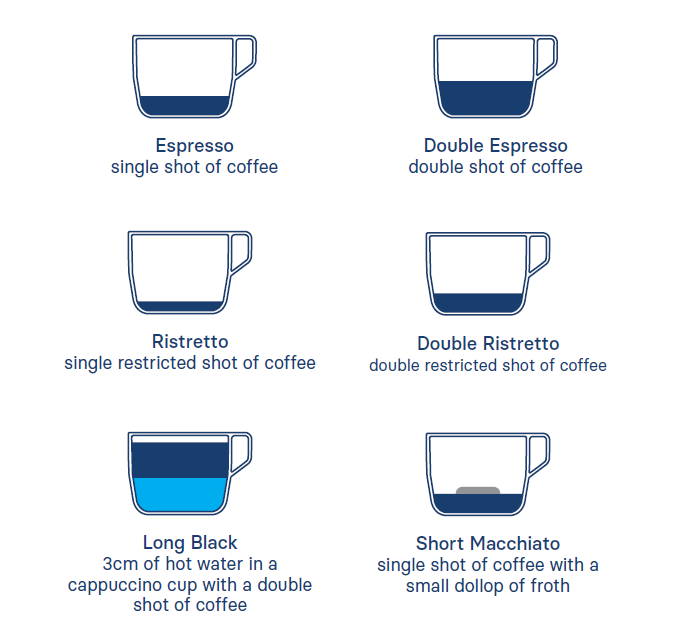
What are the different espresso coffee drinks?

Espresso menus around the world can vary a lot but in Melbourne, these are the common ones that deserve our attention. On top of that, it is common to find Mochas, Iced Lattes and Affogatos on the menu and these can vary from venue to venue. The key is consistency! Once you have developed your coffee menu, make sure you can execute it with a good recipe each and every time. We talk more about this in our Basic Espresso course and actually learn how to make all of these coffees in our Barista Apprenticeship program.

 
Espresso-Coffee-Menu-1.png
Espresso-Coffee-Menu-2.jpg
Find out more

How do I become a barista?

I get asked this questions a lot! Unfortunately there is no formal process or qualification to become a barista in Australia. To be honest, most people get thrown in the deep end and learn as they go. Barista courses are a good place to get started but definitely don’t make you a qualified barista or help you manage the stresses of a busy cafe environment.

We’re hoping to change this at Melbourne Coffee Academy. That’s why we launched the first Barista Apprenticeship program for the specialty coffee industry in Australia. The aim is to not just to equip students with technical skills but also the practical and real-life skills needed to work within the hospitality industry. This means in-depth specialty coffee training along with hands-on, real-time cafe experience in a high volume environment. We believe there is no quicker (and more complete) way to learn coffee skills than to be coached by professionals in a fast-paced, high volume cafe environment. The goal of the program is to help you find work as a barista, therefore part of the course is dedicated to refining your resume and helping to create work opportunities.

What we currently offer with this course is only a starting point but we believe there is so much more we can do as an industry to create a dedicated pathway to becoming a barista. The coffee industry is thriving and we firmly believe there is a strong future and career path for dedicated, well equipped coffee professionals.

 
Find out more
 

How to make an espresso

Making a well executed espresso doesn’t have to be difficult. Here we break down our procedure at the Melbourne Coffee Academy. This is crucial in becoming a barista or making great coffee at home as it forms the basis of all espresso beverages. To learn more, check out our Basic Espresso Course.

Procedure

  1. Remove portafilter from the group head.

  2. Purge group head for 3 seconds to remove excess coffee from the shower screen.

  3. Wipe drip tray to ensure a clean surface. A wet drip tray will promote cross contamination and pick up stray coffee grinds.

  4. Tap portafilter on the knock box to dislodge the coffee puck.

  5. Wipe out portafilter with a clean, dry tea towel.

  6. Place portafilter on the scales and tare.

  7. Dose coffee into the centre of the portafilter.

  8. Distribute by tapping the portafilter gently twice with your palm to settle the grinds and centralise them.

  9. To remove any air pockets tap the portafilter on a flat surface.

  10. Return portafilter to scales to ensure you are within 0.1 grams of prescribed dose. Add or remove grinds accordingly.

  11. Tamp the coffee levelly with an even amount of pressure. Make sure to calibrate tamp pressure with the other baristas in your team.

  12. Apply pressure with your weight and shoulder rather than your wrist to alleviate strain and avoid injury.

  13. Clean the rim of the basket to avoid coffee grinds sitting up on the gasket seal.

  14. Gently place the portafilter into the group head to avoid cracking the puck.

  15. Turn on the group head immediately to begin extraction.

  16. Steps 1-14 should be done as quickly as possible to avoid losing thermal mass in the portafilter.

  17. Assess the flow rate and evenness of the extraction.

  18. Look out for channelling, which can happen because of uneven tamping, sloppy distribution or rough handling when inserting the portafilter.

  19. If the volumetrics are setup correctly the extraction should automatically stop at the at the desired yield.

  20. Check shot times. They should be within +/- 3 seconds of the desired time

Learn more
 
MCA-Espresso-Brewing-2019-18.jpg
 
MCA-TrainingSession--88.jpg